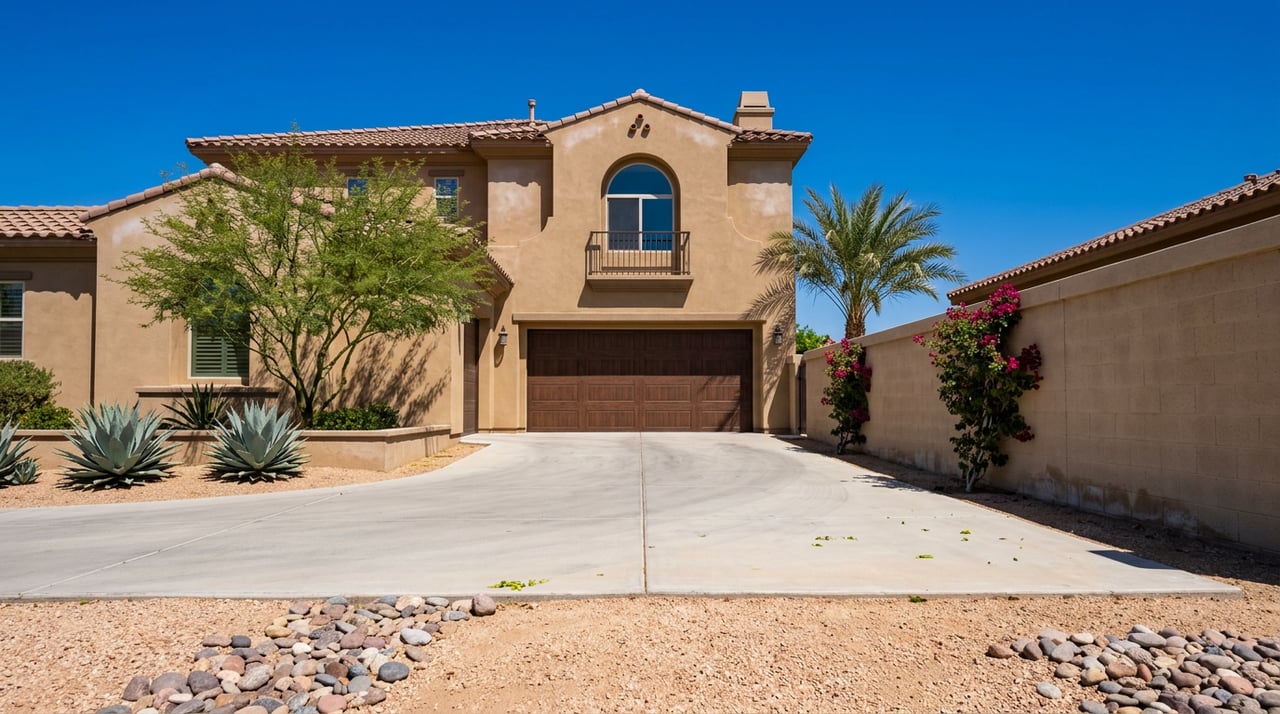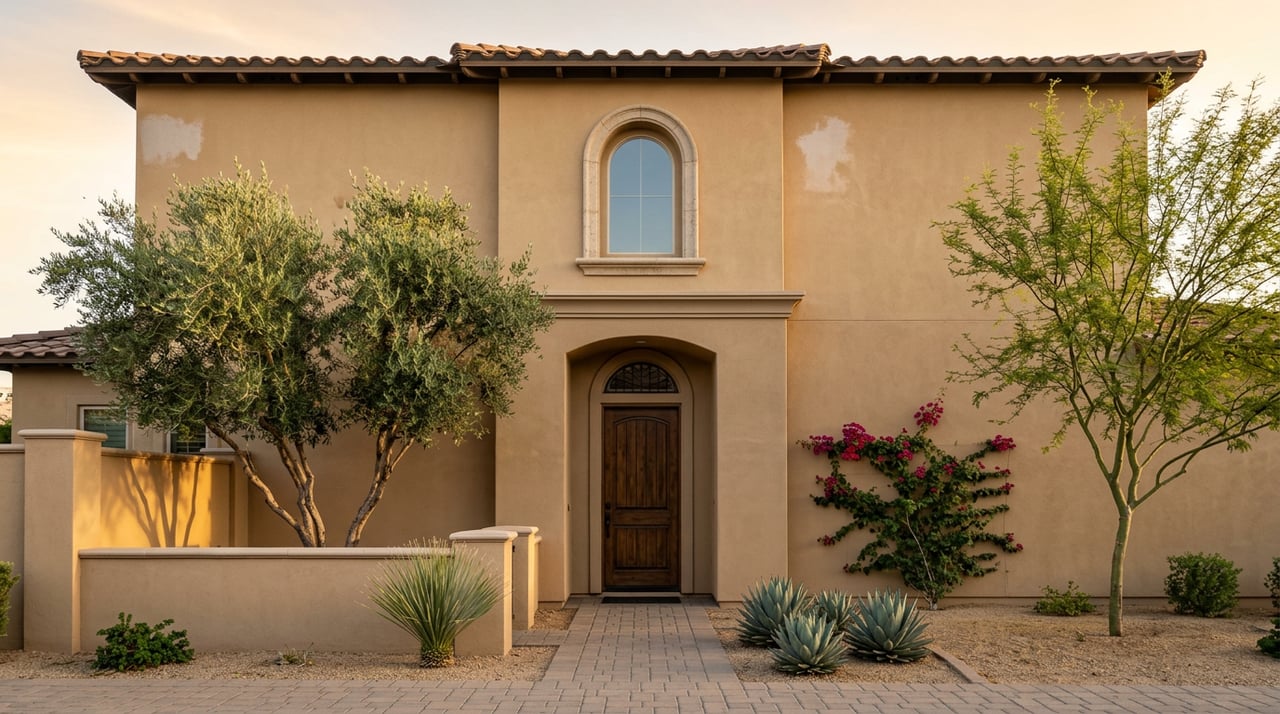
Two buyers close on nearly identical homes the same week, a half mile apart, at the same price. Same square footage, same year built, same school attendance zone. Their first property tax bills arrive that fall six months apart in dollar terms, sometimes by thousands. Neither buyer overpaid. Neither got a bad deal. The gap comes from something that has nothing to do with either transaction: how long the previous owner held the house before selling it.
That is the part of Arizona's property tax system that catches almost every relocation buyer off guard, and it matters most in the neighborhoods where Arizona Proper spends the most time: Paradise Valley, Scottsdale, Arcadia, and the Biltmore corridor, where price points are high enough that a tax surprise shows up as a real monthly number, not a rounding error.
The Only Number Your Tax Bill Actually Uses
Every parcel in Maricopa County carries two values. The first is Full Cash Value, the Assessor's estimate of what the property would sell for on the open market. The second is Limited Property Value, a separate figure that Arizona voters locked in through Proposition 117 in 2012. Since that measure took effect, Limited Property Value is the only number used to calculate a tax bill, and by law it can rise no more than five percent over the prior year's figure, regardless of what the market is doing.
That structure alone means your Full Cash Value and your tax bill can move in completely different directions in the same year. A home can jump in market value and the taxable side barely moves, because the cap does its job. What most buyers miss is what happens to that cap the moment ownership changes hands.
Arizona Doesn't Reset the Meter When a Home Sells
A sale in Arizona does not reset the taxable value to what you paid. The buyer inherits the seller's capped number, and the clock keeps running from there.
This is the mechanism that trips up buyers moving from California in particular, because the two states run on opposite logic. California's Proposition 13 reassesses a property to its purchase price at the moment of sale, which is why a longtime owner and a brand-new buyer next door can carry wildly different bills. Arizona built the opposite system on purpose.
| Arizona | California | |
|---|---|---|
| What triggers a fresh valuation | New construction, a parcel split or combination, a change in property use, or property left off the roll (Rule B) | A change in ownership (Proposition 13) |
| What happens at an ordinary home sale | The buyer inherits the seller's capped Limited Property Value; the 5% annual cap keeps running uninterrupted | The property is reassessed to the purchase price, setting a new base year value |
| Annual growth cap | 5% per year on Limited Property Value under Proposition 117 | 2% per year on assessed value under Proposition 13, once reassessed |
A change in who lives in the house, by itself, is not treated as a change in use under Arizona's statute. So when you buy a Scottsdale home from an owner who has been there twenty years and whose valuation has been quietly climbing five percent annually the entire time, you inherit that same climbing number, not a fresh calculation based on what you just paid. The seller's last tax bill is a real clue to what you'll owe in year one. It is not a guarantee of what you'll owe five years from now, and it was never tied to your purchase price to begin with.
The Teardown Tax Trap in Paradise Valley
This mechanism has a sharp edge in Paradise Valley, where a large share of buyers are purchasing older ranch homes specifically for the acre-plus lot, with plans to demolish and build custom. That plan changes the tax math.
New construction is one of the handful of events that triggers what Arizona calls a Rule B valuation. Instead of simply carrying the prior owner's capped value forward, the Assessor re-establishes the Limited Property Value using the average relationship between market value and taxable value for comparable properties in the area. In plain terms, the discount that had been quietly building for decades on that lot disappears, and a new, more market-aligned baseline takes its place, with the five percent cap resuming from that fresh number going forward.
None of this means teardown buyers should reconsider the plan. It does mean the year-one tax bill on a rebuilt custom home will not resemble the modest number the prior rancher was paying, and that gap is worth modeling into a project budget before groundbreaking, not after the first bill arrives.
A Second Home Is a Different Tax Class
Arizona classifies owner-occupied primary residences as legal class 3, assessed at ten percent of Limited Property Value. A second home, a vacation property, or a long-term rental gets classified as legal class 4, assessed at the same ten percent rate but without the state aid to education reduction that applies to a primary residence.
The Limited Property Value can be identical on paper. The bill still comes out slightly higher for the non-owner-occupant, purely because of how the parcel is classified. This is a real consideration for the out-of-state buyer purchasing a Paradise Valley or Scottsdale property as a second home rather than a primary residence, and it is worth confirming with the Maricopa County Assessor's residential property division before assuming a like-for-like comparison with a neighbor's bill.
Two Moving Parts, Not One
The valuation cap is only half the story. The other half is the levy rate itself, and that number is set independently by each taxing jurisdiction layered onto a parcel: the county, the city or town, the school district, and any special districts.
Maricopa County's own Board of Supervisors actually lowered its primary property tax rate for fiscal year 2027 to $1.1463 per $100 of assessed value, down from $1.4009 seven years earlier, setting the rate specifically to hold revenue from existing properties flat relative to fiscal year 2021. That is a county government choosing to keep its own slice of the bill from growing simply because home values did.
Cities behave differently based on what they need to fund. Paradise Valley operates as a residential-only municipality with no commercial tax base, and it keeps its own municipal levy comparatively light because it isn't funding the kind of infrastructure and services a growing commercial corridor requires. A fast-expanding community building new roads, parks, and fire stations carries a heavier municipal levy to pay for that growth. So the town with the highest home prices in the Valley is not necessarily the town with the highest tax rate, and a lower rate elsewhere doesn't automatically mean a lower bill once you multiply it against a much higher valuation.
What This Means If You're Comparing Homes Right Now
If you're weighing a purchase across Scottsdale, Arcadia, and the Biltmore corridor, the median price on a listing tells you almost nothing about the tax line on a mortgage worksheet. Two practical habits solve this.
First, pull the actual parcel record rather than estimating from a percentage. The Assessor's online tools show the current Full Cash Value, Limited Property Value, and legal classification for any specific address, which is the only way to know what you're actually inheriting.
Second, pay attention to timing, because the valuation and the bill land more than a year apart. The bill arriving in Maricopa County mailboxes this fall reflects a Notice of Value the Assessor mailed back in early 2025, with an appeal window that closed that April, long before most people who will pay that bill had even started house hunting. The next cycle is already locked in too: the Assessor mailed Notices of Value for tax year 2027 to nearly 1.75 million Maricopa County property owners in February 2026, with the appeal window closing April 21 and the Assessor's own ruling deadline landing August 15. That valuation is the one that will show up on statements in 2027, not this year's. If you're closing on a home in the next few months, the number that matters to your future tax bill was already set months ago, and the actual bill won't catch up to it until next year.
Quick Answers
Will my tax bill jump to match what I paid for the house? No. The Limited Property Value that sets your bill carries over from the seller and keeps growing at the same five percent annual cap, unless a Rule B event like new construction resets it.
Can I appeal the Limited Property Value directly? No. Only the Full Cash Value and the legal classification can be appealed. The Limited Property Value is a statutory calculation the Arizona State Board of Equalization confirms cannot be challenged on its own.
Does buying a fixer and renovating trigger a reassessment the way a teardown does? Renovation without new square footage, demolition, or a change of use generally does not trigger Rule B on its own. Significant additions or new construction do. Confirm any specific project with the Assessor before assuming it stays off the roll.
Where does the actual statute live if I want to read it myself? Arizona Revised Statutes 42-13301 lays out the Limited Property Value formula in full.
A tax bill in this market is the product of two separate systems moving on their own schedules: a capped valuation you inherit and a levy rate your city sets for its own reasons. Comparing neighborhoods on median price alone skips both. If you're weighing a purchase across Paradise Valley, Scottsdale, Arcadia, or the Biltmore corridor and want the actual parcel numbers pulled before you write an offer, Jorge L. Quijada and the team at Arizona Proper Real Estate can walk the specific address with you. Schedule a private consultation before your next tax bill decides the comparison for you.